


A question circulating on social media recently caught our attention: do businesses still need a website in 2026? It is the kind of question that sounds provocative but carries real strategic weight, particularly for small and medium-sized enterprises (SMEs) across the Caribbean. The short answer is yes. The longer answer requires a closer look at what has changed in search, how consumers find businesses, and what is actually at stake when a business chooses to exist only on social media.
The Search Engine Has Changed. The Stakes Have Not.
One year ago, Google launched AI Mode, a reimagined search experience powered by generative artificial intelligence. Within twelve months, it surpassed one billion monthly users, with queries more than doubling every quarter since its debut (Google, 2026). This is not a modest update. It represents a fundamental shift in how consumers access information and how businesses are discovered online.
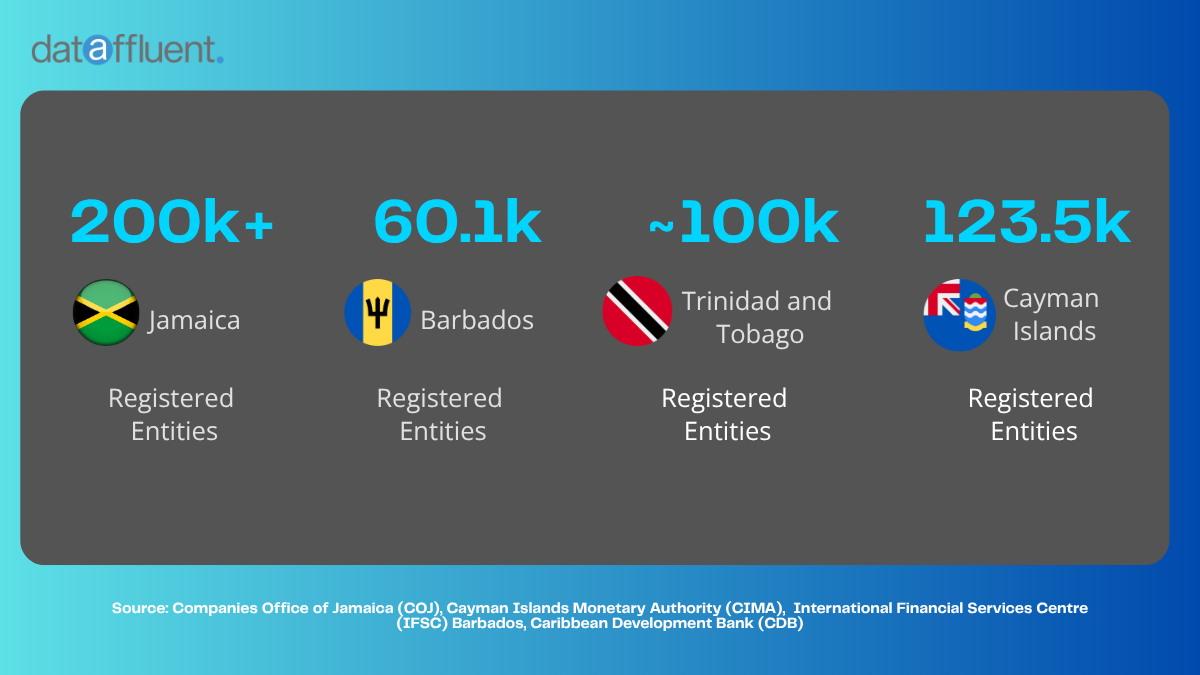
For Caribbean businesses, this shift matters enormously. The region is home to a dense, growing commercial ecosystem. Jamaica alone had more than 69,000 active companies and upwards of 200,000 businesses on the Companies Office of Jamaica (COJ) register as of the most recently available data (Ministry of Industry, Investment and Commerce [MIIC], 2024). The Cayman Islands hosts over 123,500 registered companies and partnerships, reflecting its role as a global hub for international fund structures and private wealth management (Cayman Islands Monetary Authority [CIMA], 2025). Trinidad and Tobago is estimated to have between 60,000 and 100,000 registered entities, while Barbados carries approximately 60,100 business registrations across its jurisdiction (International Financial Services Centre [IFSC] Barbados, 2024; Caribbean Development Bank [CDB], 2023).
These are not small numbers. And yet, when we look at domain registration figures across the same markets, a troubling gap appears.
Businesses Are Registering. Websites Are Not.
Across the Caribbean, domain registrations tell a very different story than business registrations. Jamaica, with its large commercial base, has an estimated 10,000 to 22,000 active domain registrations spanning .com.jm, .edu.jm, and .gov.jm extensions, according to registry reports (Internet Society Caribbean, 2024). Trinidad and Tobago, managed through TTNIC, typically has between 2,000 and 3,000 actively registered .tt and .co.tt domains (Trinidad and Tobago Network Information Centre [TTNIC], 2024). Barbados holds an estimated 1,200 to 1,300 active .bb and .co.bb registrations (Barbados Registry of Corporate Affairs, 2024).
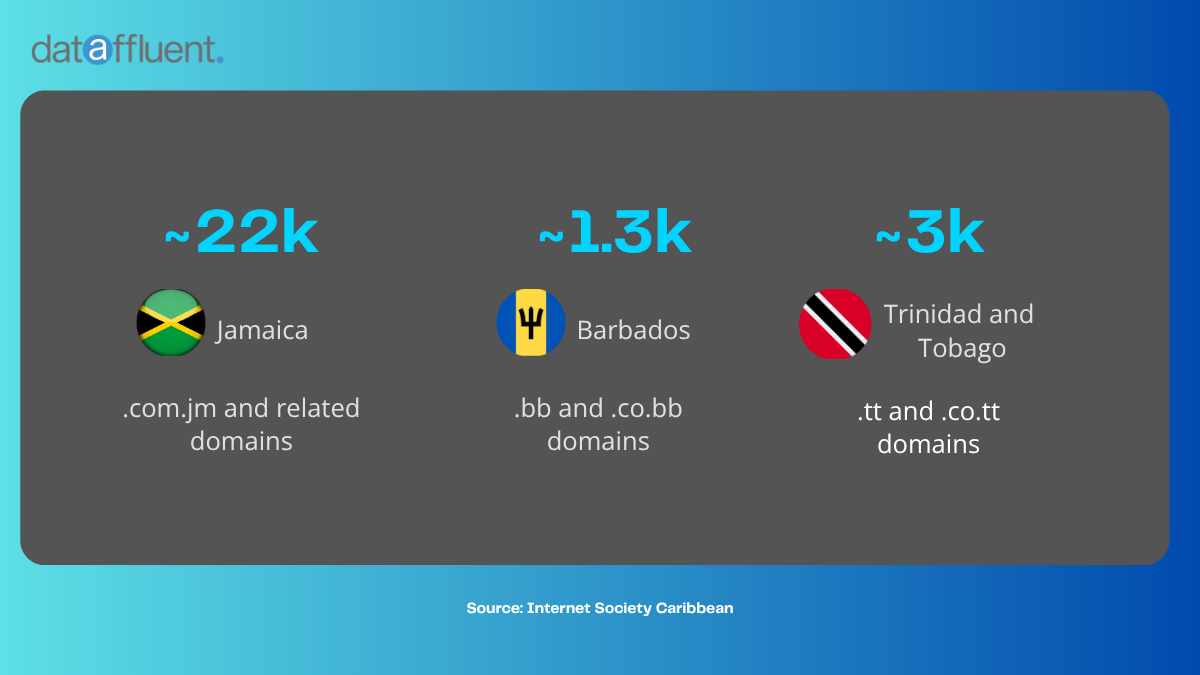
Given that not all businesses will register with a country code top-level domain (ccTLD) that identifies their country, even if we were to 5x these figures, there is still a wide variance. Taking the most generous domain estimates, the gap between registered businesses and registered domains across these markets is staggering. At best, four in ten businesses has a domain. At worst, the ratio is far lower. This means the majority of Caribbean businesses are either operating entirely offline or, as is increasingly common, relying exclusively on social media as their digital front door.
Social Media Is Not a Substitute for a Website
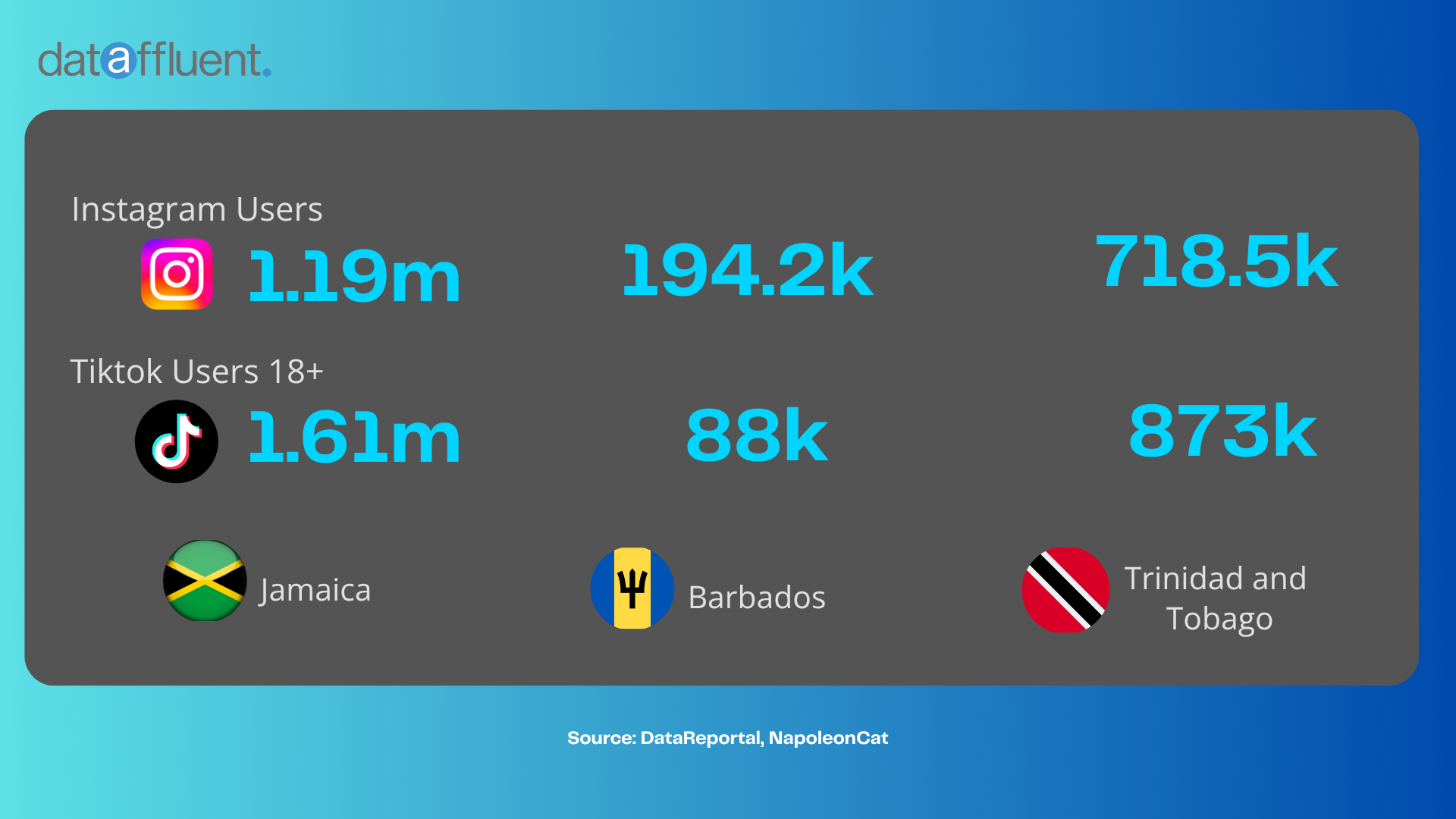
The numbers on social media adoption are compelling. In April 2026, there were 1,190,800 Instagram users in Jamaica, accounting for 41% of the total population (NapoleonCat, 2026). Trinidad and Tobago had 718,500 Instagram users in May 2025, representing 53.1% of its population (NapoleonCat, 2025a). Barbados recorded 194,200 Instagram users as of June 2025, a penetration rate of 66.5% (NapoleonCat, 2025b).
TikTok figures are equally significant. ByteDance’s advertising resources indicated 1.61 million TikTok users aged 18 and above in Jamaica as of early 2024, 873,000 in Trinidad and Tobago, and 88,000 in Barbados (DataReportal, 2024a; DataReportal, 2025; DataReportal, 2024b). These platforms have reach. They have audiences. But they do not give businesses ownership.
When a business operates solely through Instagram or TikTok, it is building its entire customer relationship on rented land. Platform outages, algorithm changes, account suspensions, and policy updates are all outside the business owner’s control. Perhaps more critically, without a website, a business rarely has a customer database. There are no email addresses to use for targeted campaigns, no phone numbers for personalised outreach, and no mechanism for segmenting loyal customers from first-time visitors. The relationship between the business and its customer is mediated entirely by a data company with its own interests and its own terms of service.
This is not a hypothetical risk. It is a structural vulnerability that affects thousands of Caribbean SMEs every time a platform experiences disruption or changes its visibility rules.
Google Has Already Decided: Your Website Is the Source of Truth
Regardless of how popular social media becomes, Google’s search algorithms and its AI Mode are built on a clear hierarchy: websites rank higher than social profiles, and for good reason.
Websites are treated as primary sources of truth. They host structured, permanent content that search algorithms can read, index, and evaluate through Schema markup and semantic HTML. Social media posts, by contrast, are transient. They disappear into a feed within hours and offer limited structure for automated systems to parse.
Google evaluates content through a framework known as E-E-A-T: Experience, Expertise, Authoritativeness, and Trustworthiness. In-depth articles, case studies, service pages, and structured data hosted on a business’s own domain carry significantly more authoritative weight than a social media caption, regardless of how many likes it receives (Optimize5, 2024). Social media can and should serve as a distribution channel and a discovery mechanism. But the content it points to, the destination that search engines index and that customers ultimately trust, must be your website.
The implication for AI Mode is direct. When a consumer asks Google’s AI to recommend a hotel, a law firm, or an accounting service, the AI synthesises information from structured, credible web sources. Businesses without websites are largely invisible to this process.
AI Has Also Created a New Threat for Businesses Without Websites
The same AI tools that make websites more powerful have also made digital impersonation cheaper and faster than ever before. A case that gained significant attention recently illustrated the emerging threat clearly: scammers used AI to deploy a fake hotel booking website, complete with a functional payment workflow, targeting customers who searched for accommodation. The genuine hotel had no web presence of its own, which meant it had no authoritative digital footprint for either customers or AI systems to verify against (Federal Trade Commission, 2025).
This is not an isolated incident. AI-powered booking scams impersonating hotels, travel agencies, and professional service firms are scaling rapidly, precisely because the cost of deploying convincing fake workflows has collapsed. The FTC and state attorneys general are beginning to see a significant volume of these cases (Federal Trade Commission, 2025). Regulators have not yet fully caught up to the accountability vacuum created when an operation is entirely staffed by AI with no human contact point.
For any business without a verified online presence, the risk of being impersonated is real and growing. A well-structured, consistently maintained website with verified ownership, SSL certification, Google Business Profile linkage, and a documented track record of content is the most effective counterweight to impersonation. It is the digital equivalent of a title deed.
What This Means for Caribbean Businesses
The Caribbean’s digital transformation is well underway. Social media penetration is high. Mobile connectivity is expanding. Consumer expectations are shifting. But the foundation of a sustainable digital business strategy, one that captures the benefits of AI-era search, protects against fraud, and preserves direct customer relationships, is still a well-optimised website.
A business that exists only on social media is visible to its followers. A business with a website is visible to the internet, to AI systems, to search engines, and to every prospective customer who has never heard of it before. That is a fundamentally different level of reach, credibility, and resilience.
The question was never really whether websites were still relevant. The question is whether Caribbean businesses can afford not to have one. So, to answer the question more directly, do you still need a website? Absolutely, now more than ever!
About Dataffluent
Dataffluent is a Techstars-backed data science and analytics company headquartered in Kingston, Jamaica. We build data products and analytical solutions that help financial institutions, investors, and businesses across underserved emerging markets move from raw data to decisions that drive measurable results. Our flagship product is a financial analyst platform purpose-built for the Caribbean capital markets. The platform delivers fundamental analysis of publicly traded companies across the region, combining machine learning-driven sentiment analysis, and macroeconomic predictions covering inflation, interest rates, and foreign exchange movements. For analysts, portfolio managers, and institutional investors operating in markets where reliable, region-specific intelligence has historically been hard to come by, this fills a critical gap. We understand the market we operate in. Fragmented data environments, thin public disclosure requirements, and the unique macroeconomic dynamics of small open economies are not edge cases for us. They are the conditions our models are trained on, and our platform is built for. Join our beta waitlist or book a demo to learn more.
References
Article Image Source: Photo by Vitaly Gariev on Unsplash
Barbados Registry of Corporate Affairs. (2024). Annual report on business registrations. Government of Barbados.
Caribbean Development Bank. (2023). Private sector development in the Caribbean: Business registration and enterprise activity. CDB Publications.
Cayman Islands Monetary Authority. (2025). Regulatory statistics: Active registered entities. CIMA. https://www.cima.ky/statistics-publications
DataReportal. (2024a). Digital 2024: Jamaica. https://datareportal.com/reports/digital-2024-jamaica
DataReportal. (2024b). Digital 2024: Barbados. https://datareportal.com/reports/digital-2024-barbados
DataReportal. (2025). Digital 2025: Trinidad and Tobago. https://datareportal.com/reports/digital-2025-trinidad-and-tobago
Federal Trade Commission. (2025). Consumer sentinel network data book 2024. FTC. https://www.ftc.gov/reports/consumer-sentinel-network
Google. (2026, May). Search at Google I/O 2026: AI Mode, agents, and the future of search. Google Blog. https://blog.google/products-and-platforms/products/search/search-io-2026/#search-agents
International Financial Services Centre Barbados. (2024). Registered business entities in Barbados. IFSC Barbados. https://www.ifcbarbados.org
Internet Society Caribbean. (2024). Caribbean domain name landscape report. Internet Society.
Ministry of Industry, Investment and Commerce. (2024). Another record year: COJ business and company registrations. Government of Jamaica. https://www.miic.gov.jm/another-record-year-coj-business-company-registrations/
NapoleonCat. (2025a). Instagram users in Trinidad and Tobago, May 2025. https://stats.napoleoncat.com/instagram-users-in-trinidad_and_tobago/2025/05/
NapoleonCat. (2025b). Instagram users in Barbados, June 2025. https://stats.napoleoncat.com/instagram-users-in-barbados/2025/06/
NapoleonCat. (2026). Instagram users in Jamaica, April 2026. https://stats.napoleoncat.com/instagram-users-in-jamaica/2026/04/
Optimize5. (2024). Does social media help your Google and AI visibility? https://optimize5.com/does-social-media-help-your-google-and-ai-visibility/
Trinidad and Tobago Network Information Centre. (2024). .tt domain registration statistics. TTNIC. https://www.ttnic.tt


0 Comments